

Goannas in the Northern Territory are a familiar sight around Dundee Beach, from a big yellow-spotted monitor ambling across a bush track to a Mertens’ water monitor slipping off a log into a lagoon.
These are some of Australia’s largest lizards, and the Top End is home to several different species, each with its own size, colouring and favourite habitat.
Goannas in the Northern Territory range from strongly aquatic species that rarely stray far from water to bigger, more terrestrial goannas that roam open woodland and bush.
If you want to know more about Goannas in the Northern Territory around Dundee Beach, here’s what to look for and how to stay safe around the water they share with crocodiles.
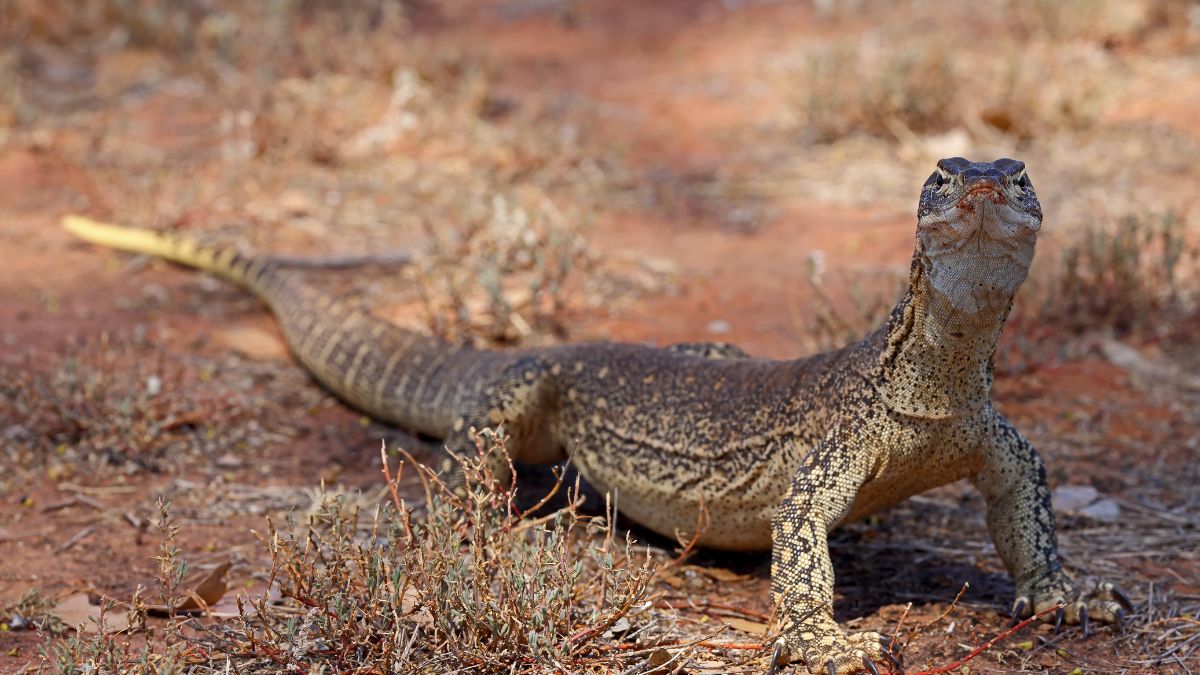
Meet the Goannas of the Northern Territory
Three species are commonly seen around Dundee Beach, each suited to a slightly different part of the landscape.
How to identify them
- Mertens’ water monitor: dark brown to black with cream spots, strongly aquatic, rarely far from water
- Yellow-spotted monitor: large, pale tan body with rows of yellow spots, often seen on open ground
- Lace monitor: dark bands across the body, long slender tail, a strong climber often seen up trees
Mertens’ water monitor is the one most likely to be seen swimming or basking on a log over a creek or lagoon, while yellow-spotted monitors are more often spotted crossing tracks and clearings on land. All three species are excellent climbers when they need to be, and a startled goanna will often bolt straight up the nearest tree trunk, much like a Frill-necked Lizard escaping danger.
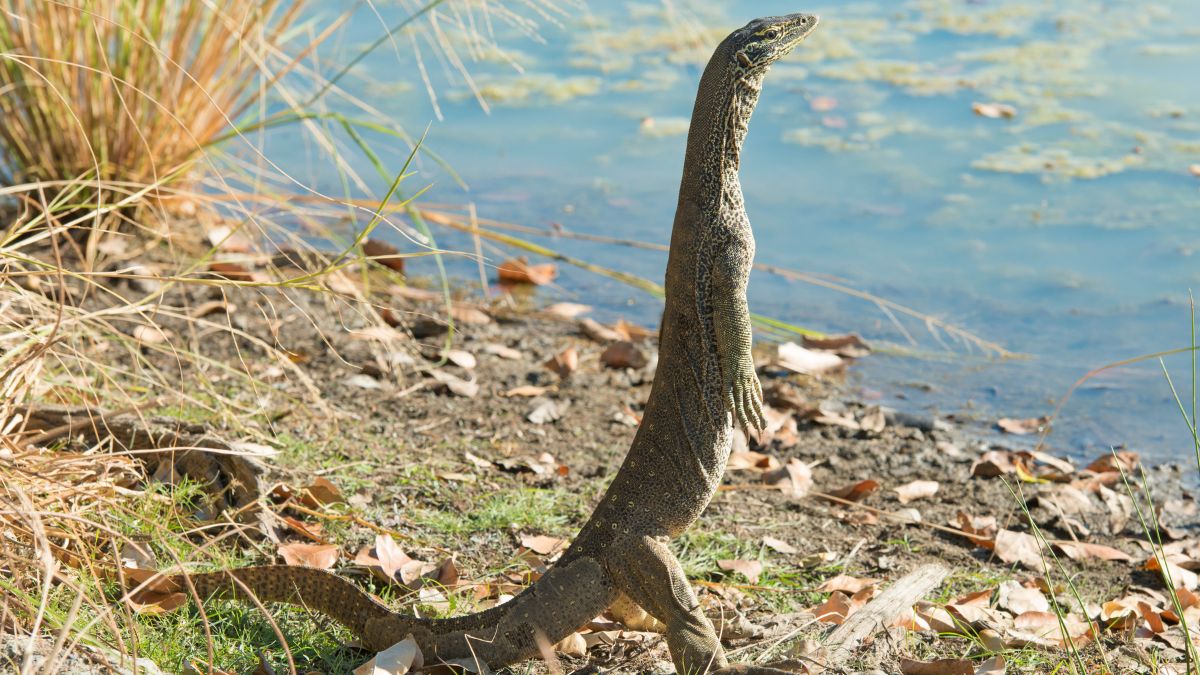
Where to See Goannas in the Northern Territory Around Dundee Beach
Different species favour different habitat:
- Creek banks, lagoons and billabongs for Mertens’ water monitor
- Open woodland tracks and clearings for yellow-spotted monitors
- Trees and forest edges for lace monitors
- Sandy dunes and beach margins, where large goannas sometimes forage for eggs
Local Tip
A goanna that suddenly stops and stands tall on its back legs is scanning for danger or checking out its surroundings, not preparing to attack. Give it space and it will usually move off on its own, either back into the bush or up the nearest tree.
The Best Time to See Goannas
Goannas in the Northern Territory are most active on warm, sunny days, basking to raise their body temperature before heading off to hunt. They’re less active during the cooler months and on overcast days, when they spend more time sheltering.
Under Pressure From Cane Toads
Yellow-spotted monitors in particular have been hit hard since cane toads spread through the Top End, with local populations dropping by as much as 90 percent in badly affected areas after goannas ate the toxic toads.
Researchers have had some success training wild goannas to avoid toads by exposing them to small, less toxic “teacher toads” early on, and sites using this approach have kept healthier goanna numbers than nearby areas without it. Because goannas are such important predators and scavengers, their decline has knock-on effects for the health of the wider bushland ecosystem around Dundee.
What Do Goannas Eat?
Goannas are opportunistic predators and scavengers:
- Insects, crabs and small reptiles
- Eggs, including turtle and bird eggs
- Small mammals and birds
- Carrion, scavenged whenever it’s available
Mertens’ water monitors add fish and frogs to that list, hunting effectively both in and out of the water.
Be Crocwise Around the Water
Goannas in the Northern Territory spend a lot of time at the water’s edge, especially Mertens’ water monitor, and so do saltwater crocodiles. Anywhere you’re likely to spot a goanna sliding into a creek or lagoon, croc safety applies.
Stay back from the water’s edge, never wade in for a closer look, and never let children or pets play unsupervised near creek banks or lagoons. Be Crocwise every time you’re near water around Dundee, no exceptions. You can read the full set of local water safety rules in our guide to Saltwater Crocodiles in the Northern Territory.
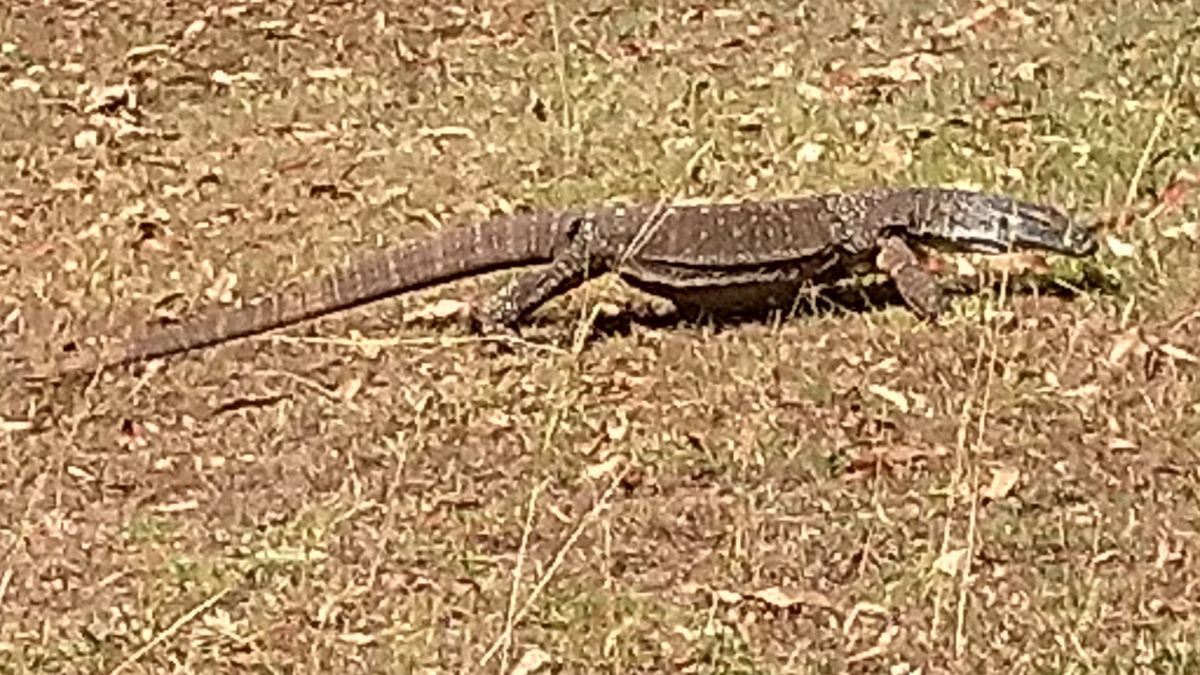
More Than Just a Big Lizard
Goannas in the Northern Territory are important scavengers and predators, helping keep everything from insect numbers to carrion in check across the habitats they use.
Their strong sense of smell and constant foraging make them one of the bush’s most effective natural clean-up crews, and their decline in cane toad affected areas has flow-on effects for the wider ecosystem. Healthy goanna numbers are a good sign of a functioning, balanced patch of bush.
Respect Our Wildlife
A few simple habits keep encounters good for both people and goannas:
- Never feed goannas, at camp or anywhere else
- Keep a respectful distance rather than approaching for a closer photo
- Secure food and rubbish so goannas aren’t drawn into camp areas
- Leave logs, burrows and hollows undisturbed
Frequently Asked Questions
Are there Goannas in the Northern Territory around Dundee Beach?
Yes, several species are common around Dundee Beach, including Mertens’ water monitor, yellow-spotted monitor and lace monitor.
Are goannas dangerous?
Goannas generally avoid people, but they can deliver a painful bite or scratch if cornered or provoked, so it’s best to give them space and never attempt to touch or feed one.
Why have goanna numbers dropped in the Northern Territory?
Cane toads are highly toxic, and goannas that eat them can die, causing severe local population declines. Read more via the research on cane toads and monitor lizard decline.
What do goannas eat?
Goannas eat insects, eggs, small animals and carrion, with water-dwelling species like Mertens’ water monitor also taking fish and frogs.
Explore More Dundee Beach Wildlife
If you love spotting native wildlife, keep an eye out for more articles in our Dundee Beach Wildlife Guide, covering the birds, reptiles, marine life and mammals that make this part of the Northern Territory so special.
Whether you spot one crossing a bush track or slipping into a lagoon, Goannas in the Northern Territory are one of the most common and fascinating reptiles you’ll see around Dundee.

